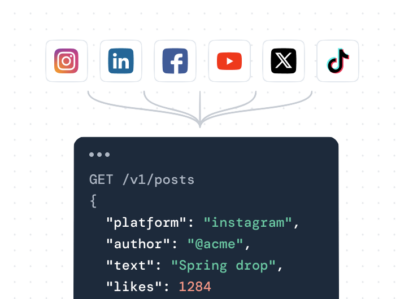

In need of real websites with social media feeds you can actually learn from before building your own? We pulled together a tested gallery of social media feed website examples from live brand, club, city, and B2B sites, grouped by platform, so you can jump straight to the LinkedIn, Facebook, Instagram, or multi-platform layout that fits your project.
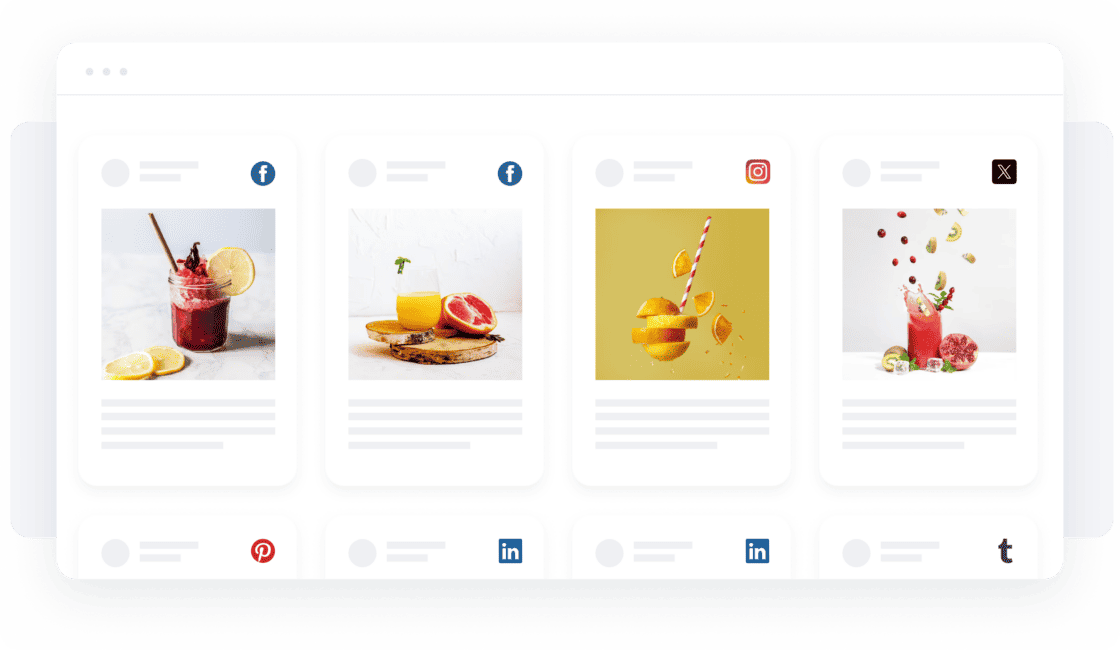
A social media feed on a website is a live section of your own page that pulls posts from your social accounts (Instagram, LinkedIn, Facebook, X, YouTube, and more) and shows them in a grid, carousel, or slider that updates automatically. Instead of a static screenshot, visitors see your recent posts, with the feed refreshing on a schedule so it keeps pace with what you publish. The examples below show how real teams use that to add social proof, fresh content, and a reason to stick around.
What makes a social media feed on a website work
A website with a social media feed works because the feed does something a static page cannot: it updates itself. You connect your accounts once, and the live social media feed pulls in new posts on its own, so the section never goes stale even when nobody touches the website for a month. Visitors get a living window into what your brand, team, or community is actually doing right now.
Behind the scenes, this is the job of a social media aggregator. It uses each platform’s API to collect posts from one or more accounts, then renders them in a layout you control: your colors, your fonts, your spacing, embedded directly into your page so it looks like it belongs there. You can read more about how that pipeline works on our social media aggregator feature page.
Editor Insight: When we reviewed the sites below, the feeds that performed best were the live ones, not the hand-picked screenshots. A static gallery looks dated the instant a brand posts something new, and visitors can usually tell. A live feed signals an active, current brand, which is half the reason to embed one in the first place.
Why brands embed a social feed
Across the sites we evaluated, the same handful of motivations came up again and again:
- Social proof through user-generated content: real posts, photos, and reactions from real accounts carry more weight than polished marketing copy.
- Always-fresh content: the page updates whenever you post to Instagram, LinkedIn, or Facebook, with no manual edits.
- More dwell time: a scrollable feed gives visitors a reason to stay and browse instead of bouncing.
- Cross-channel discovery: website visitors find your Instagram, X, or YouTube accounts and follow you there.
- Easier broadcasting: company news, events, and product drops reach your site audience soon after they go live on social, as the feed refreshes.
Display formats you will see in these examples
Before the gallery, it helps to know the layouts. Every example below uses one of these formats, and the right choice depends on your content and your platform mix:
- Grid: posts laid out in even rows and columns. Best for image-heavy Instagram and Facebook feeds where you want to show volume at a glance.
- Carousel: a rotating slideshow of posts. Ideal when you have limited vertical space, such as a homepage strip or a footer.
- Masonry: a Pinterest-style layout where tiles vary in height to fit each post. Great for mixed media, where some posts are tall images and others are short text.
- Slider or list: a single-column, chronological stream. Suits text-led platforms like LinkedIn and X, where the words matter more than the thumbnail.
Once you’ve chosen a format, you can also tune colors, font, size, and spacing so the feed matches the rest of your site design.
Websites with social media feeds: real examples we reviewed
These are real websites with social media feeds that we evaluated, each one chosen because the feed earns its place rather than just sitting there. These social media feed examples double as social media integration website examples: a sports body, a football club, a cruise line, and a nonprofit, each wiring one or more networks into their own pages. For every site we noted the platform mix, the layout, and what specifically works.
USA Track & Field
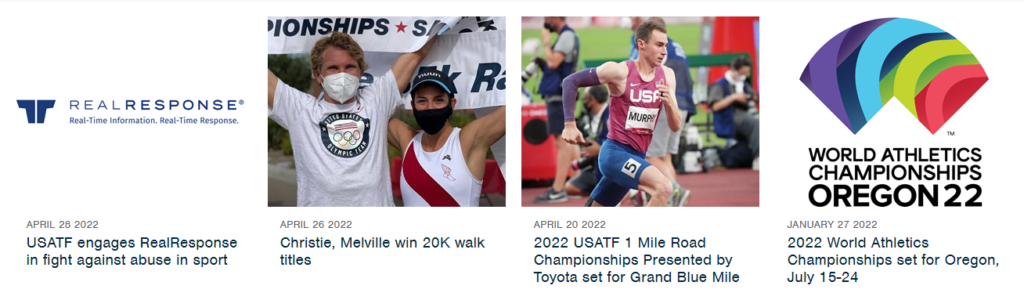
USA Track & Field runs a strong multi-platform feed pulling from Instagram, X (Twitter), and Facebook, with a filter that lets visitors switch between networks. For a national sports body posting across several channels, that filter is the standout move: fans can isolate just the Instagram highlights or just the X updates instead of wading through a single mixed stream. What works: the network filter turns a busy feed into a usable one.
Feyenoord Rotterdam
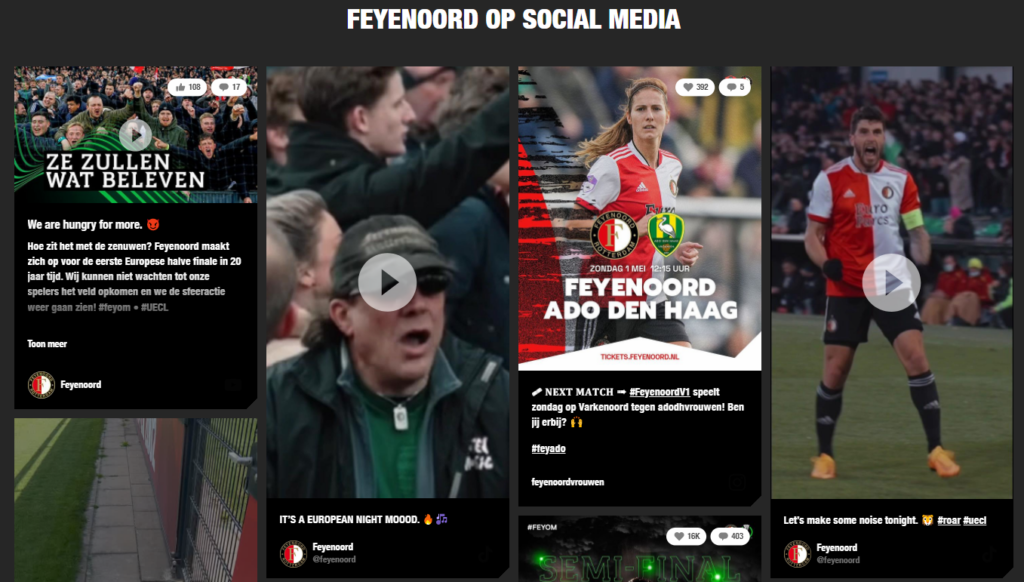
Feyenoord Rotterdam, the Dutch football club, embeds a grid feed combining YouTube and Instagram. The grid format suits a club that posts a lot of video and photo content, and pulling YouTube into the same view means match clips sit right alongside Instagram matchday photos. What works: combining YouTube and Instagram in one grid keeps both video and stills in front of fans without sending them off-site.
Hapag-Lloyd Cruises
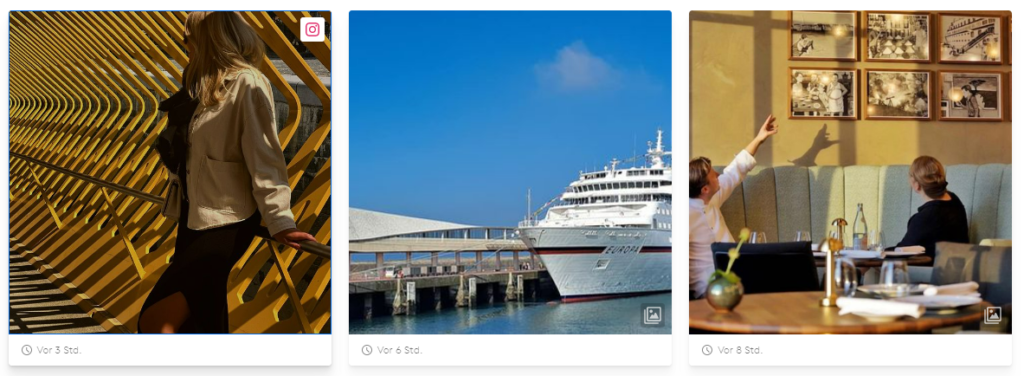
Hapag-Lloyd Cruises leans on a single-platform Instagram feed in a clean grid. For a travel and hospitality brand, that is the right call: Instagram is where the aspirational cruise photography lives, and a tidy grid lets those images sell the experience on their own. What works: one platform, picked deliberately, beats a cluttered multi-feed when the imagery is the product.

SF Marin Food Bank
SF Marin Food Bank, a nonprofit working toward a hunger-free community, displays an X (Twitter) feed in a grid. X suits a nonprofit’s mix of news, calls to action, and event updates, and the grid keeps recent posts visible without burying the latest announcement. What works: X carries timely, text-first updates that a fast-moving nonprofit needs front and center.
Team Feedback: The pattern we kept noticing across these sites is that the winning feeds match the layout to the platform’s native strength, then color-match the feed to the site’s brand palette. A grid for image platforms, a stream for text platforms, and a filter only when there are genuinely multiple active networks. The feeds that felt bolted-on were the ones that ignored that fit.
Want to see how a feed like these would look with your own accounts? Add a live social media feed to your own site and preview it in minutes.
LinkedIn feed on website example
A LinkedIn feed on a website example tends to look different from the consumer platforms. LinkedIn feeds suit B2B brands, professional services, awards announcements, and hiring, where the content is text-led and credibility matters more than visual punch. A single-column stream usually reads better here than a dense grid. Here are three real sites we reviewed.
Silicon Valley Innovation Center
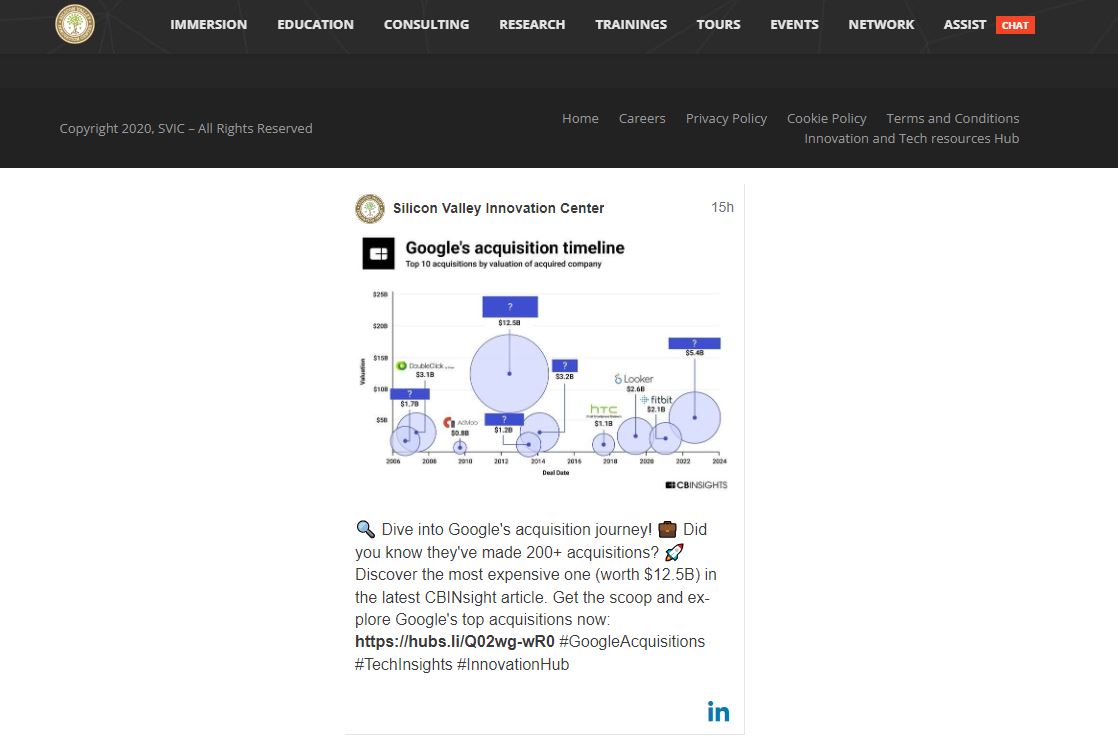
Silicon Valley Innovation Center embeds a LinkedIn feed on its blog, surfacing thought-leadership posts and corporate updates alongside its articles. What works: placing the LinkedIn stream next to long-form content reinforces the brand’s authority without the visitor leaving the page.
Cajebel
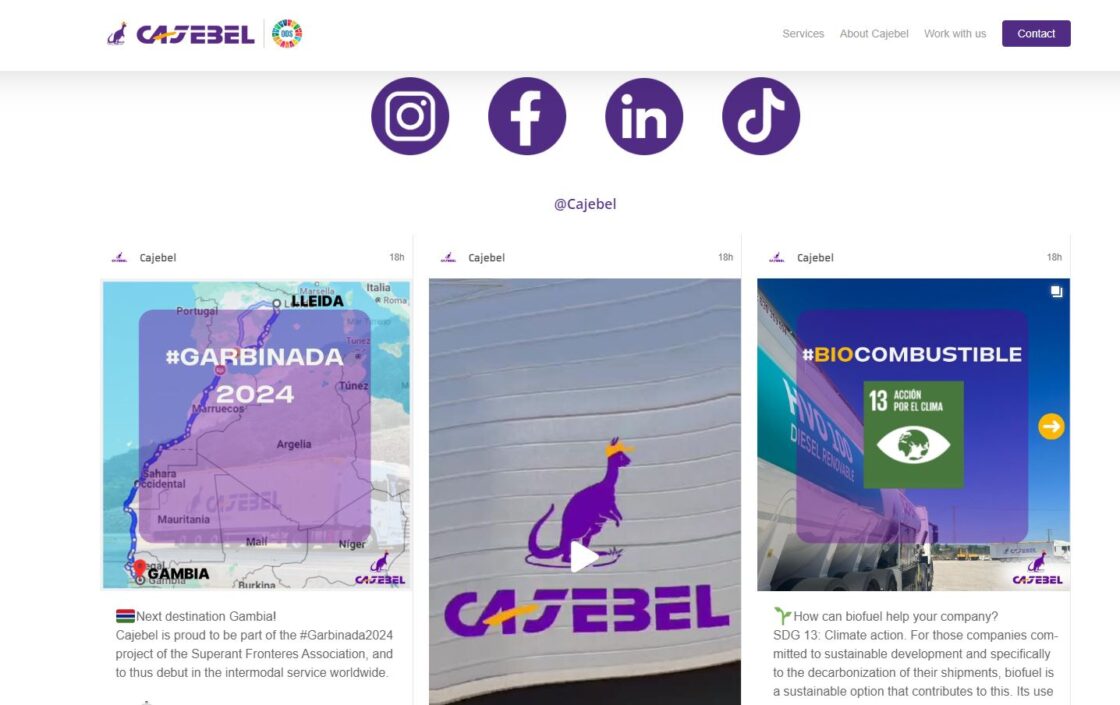
Cajebel pulls its LinkedIn activity onto its site to keep company news and professional updates visible to visitors. What works: for a B2B audience, a LinkedIn feed signals an active, credible company in a way an Instagram grid would not.
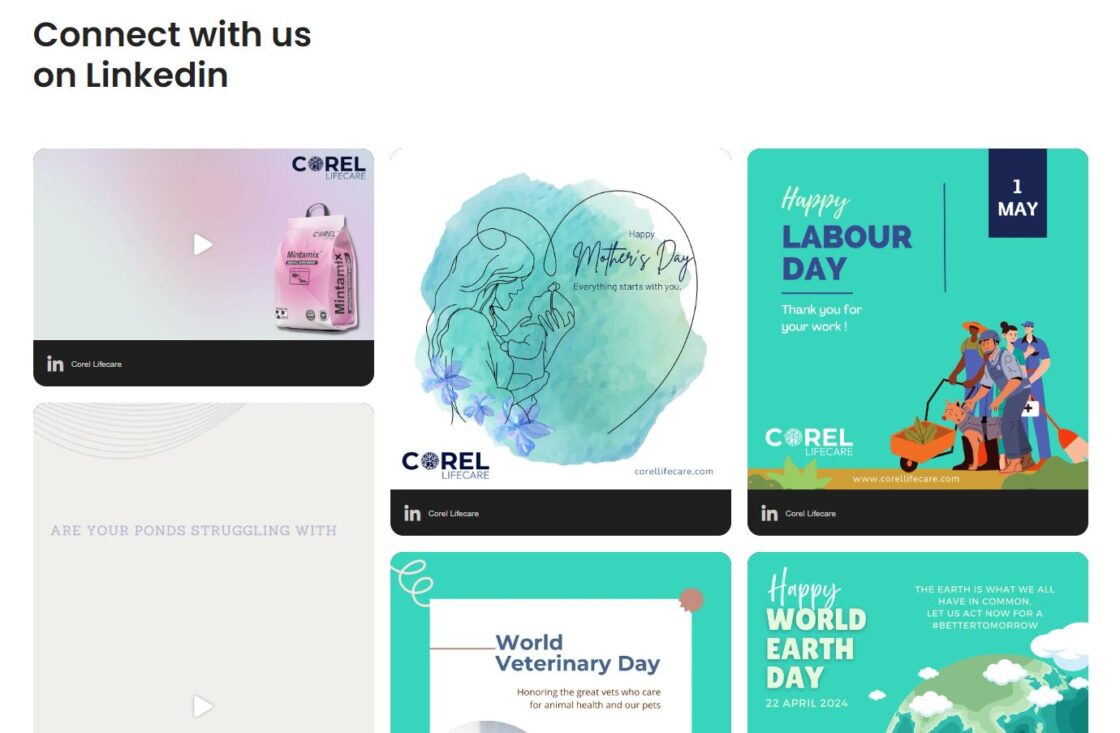
Corel Lifecare
Corel Lifecare uses a LinkedIn feed to broadcast healthcare-sector updates and announcements directly on its website. What works: the professional context of LinkedIn matches a healthcare brand’s need to look established and trustworthy.
When you are ready to build one of these yourself, our step-by-step guide on how to embed a LinkedIn feed on your website walks through the whole process.
Facebook feed on website example
A Facebook feed on a website example is a natural fit for events, longer-form posts, and community-driven brands like clubs, cities, and local organizations. Facebook posts carry more text and richer event detail than a typical Instagram caption, so a grid or list that shows that context tends to work best.
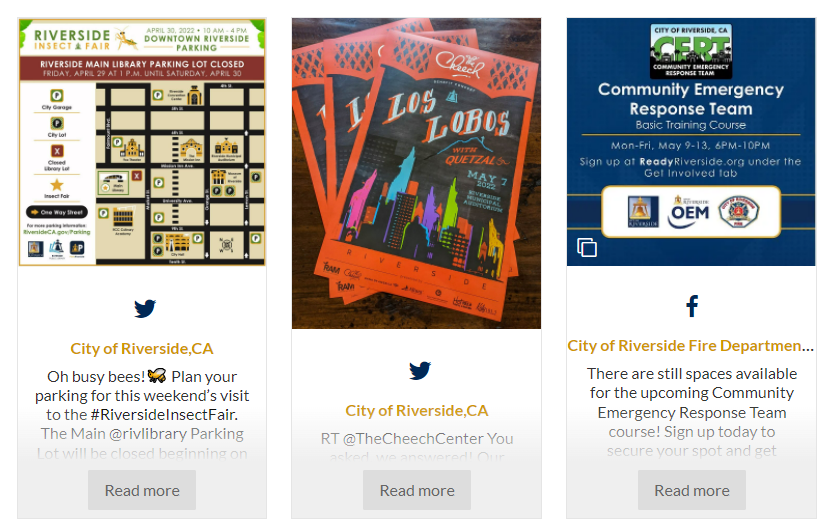
A good real-world reference is the City of Riverside, which embeds a feed combining Facebook and X that rotates through the city’s networks so residents can see everything happening across channels in one place. For a city government, Facebook is often the primary community channel, and surfacing those posts on the official site keeps residents informed without asking them to leave for the social platform. What works: Facebook carries the long event and community posts a city needs to communicate, and pulling them onto the .gov site meets residents where they already are.
To set one up on your own site, see our guide on how to embed a Facebook feed on your website.
Instagram and multi-platform feed examples
For Instagram-led brands, the feed is the visual centerpiece. Hapag-Lloyd Cruises above is a clean single-platform Instagram example, and visual brands in fashion, travel, and lifestyle lean the same way: a grid or carousel of Instagram posts that lets the imagery do the selling. If your brand lives on Instagram, our guide on how to embed an Instagram feed on your website covers the setup.
When you build a website with social media feed sections like these, restraint matters most: multi-platform feeds, such as USA Track & Field’s filterable Instagram, X, and Facebook stream, work when you are genuinely active on several networks and your audience cares about more than one. The key is the same lesson from the gallery: only combine platforms when each one is pulling its weight, and add a network filter so the feed stays scannable.
If X (Twitter) or YouTube is central to your brand, you can extend the same approach. Our walkthrough on how to embed an X (Twitter) feed on your website covers the text-led, fast-moving case that suits news, sports, and live commentary.
Want to see Juicer social’s own feed examples first? Before you commit to a layout, you can preview real Juicer.io social media feed examples without connecting an account. Browse the live demo on our feed example page, or scroll through the full set of ready-made layouts on our templates page. Both show the same Grid, Carousel, Masonry, and Slider formats used by the sites above, just built with sample content so you can see the styling options up close.
Which feed format fits which platform and goal
Pulling the gallery together, here is how the platforms, layouts, and real examples line up. Use this to shortcut your own decision:
| Platform | Best-fit layout | Example site | Why it works |
|---|---|---|---|
| Grid or carousel | Hapag-Lloyd Cruises | Image-heavy posts sell the experience; a clean grid shows volume at a glance | |
| Slider or list | Silicon Valley Innovation Center | Text-led professional posts read better as a single-column stream | |
| Grid or list | City of Riverside | Longer event and community posts need room for context | |
| X (Twitter) | Grid or list | SF Marin Food Bank | Fast, text-first updates stay timely and front-and-center |
| YouTube | Grid | Feyenoord Rotterdam | Video thumbnails read well in a grid, often paired with another platform |
| Multi-platform | Filterable grid | USA Track & Field | A network filter keeps a busy multi-channel feed usable |
How to choose the right feed for your website
Once you have studied the examples, the decision comes down to a short checklist:
- Single-platform or multi-platform? Pick one platform if a single channel carries your best content (Instagram for visual brands, LinkedIn for B2B). Combine platforms only if you post actively on each, and add a filter so visitors can switch.
- Chronological or curated? A chronological feed is honest and effortless. A curated feed lets you spotlight your best posts but needs ongoing attention. Choose based on how much you can maintain.
- Feed or wall? A feed is a compact section of a page. A wall is a full-screen, immersive display, usually for events and live screens. If a wall is what you actually want, start with our guide to social media wall types and examples or the social wall feature page instead, since that is a different layout and a different intent.
Pro Tip: An embedded feed is the wrong call when your accounts are quiet. A feed that shows a post from three weeks ago does more harm than an empty space, because it signals a brand that has gone dark. Before you embed, make sure the connected account posts regularly, and if you are pulling in user-generated content, moderate it first so off-brand or spammy posts never reach your homepage.
Whichever you choose, all of this runs through the same underlying tool: a social media aggregator that connects your accounts and renders the feed you configure.
Aggregate, embed, and engage
Every example in this gallery comes down to the same building block: an aggregator that collects your posts from one or more platforms and renders them as a feed that fits your site. Juicer is the social media aggregator that builds these feeds, pulling content from Instagram, LinkedIn, Facebook, X, YouTube, and more into one organized, on-brand space, with the colors, layout, and spacing under your control.
If these examples gave you a direction, the fastest way to see your own is to build one. Start a free social media feed and connect your first account to see how it looks on your site.