
Social events are any gathering built around connection instead of a business agenda, from backyard birthday parties to full-scale neighborhood festivals. The right social event ideas turn a routine get-together into something guests are still talking about weeks later. This guide walks through fun social event ideas for friends and small groups, community and neighborhood gatherings, parties and celebrations, and the interactive games, food concepts, and live social walls (built from real posts on Instagram, TikTok, YouTube, and X) that keep everyone engaged from the first hello to the last goodbye.
What Counts as a Social Event?
A social event is any gathering organized around relationships, celebration, or fun rather than a company’s business goals. Birthday parties, block parties, reunions, and community meetups all fall under this umbrella. That’s different from a corporate event, which is built around team building, client relationships, or company culture. If you’re planning something for your office instead of your friend group, our guide to corporate event ideas covers that ground.
A few examples of social events to get you thinking, plus examples of social activities you can drop into any of them:
- Birthday parties and milestone celebrations
- Potluck dinners and backyard barbecues
- Block parties and neighborhood picnics
- Game nights and trivia nights
- Family and class reunions
- Holiday and seasonal gatherings
- Housewarming parties
- Book clubs, supper clubs, and other recurring meetups
Social Event Ideas for Friends and Small Groups
When you’re planning something for a smaller group of friends, the goal is less about logistics and more about creating an experience people wouldn’t get on their own.
- Themed dinner party: Pick a cuisine, decade, or movie and build the menu, playlist, and dress code around it.
- Progressive dinner: Move the group between two or three homes for appetizers, mains, and dessert.
- Backyard game tournament: Set up cornhole, bocce, or ladder golf and run a bracket.
- Movie or show marathon: Build a night around a franchise, complete with themed snacks.
- Potluck with a twist: Assign categories, like spiciest dish, best dessert, or most unexpected entry, instead of just courses.
- Wine tasting: It’s hard to go wrong with this one, whether at a vineyard or a dyi one at your home. You can try beer tastings too!
Community and Neighborhood Event Ideas
Community and neighborhood social gatherings work best when they lower the barrier to showing up. Keep the ask small and the payoff obvious.
- Block party: Close off a street, set up grills and folding tables, and let neighbors bring a dish each.
- Neighborhood potluck picnic: Pick a local park and rotate hosting responsibilities each season.
- Pop-up movie night: A projector, a bedsheet screen, and blankets on the lawn.
- Community talent or open mic night: Give neighbors a low-pressure stage at a library, coffee shop, or community center.
- Seasonal festival or market: Combine local vendors, food trucks, and live music for a bigger annual gathering.
- Charity events: Get together with you community or neighbors for a cause – funding for something you want to achieve, or just to donate to a sympathetic organization.
Party and Celebration Ideas
Every social celebration benefits from a hook, something that gives the night a shape beyond just showing up and mingling.
- Milestone birthday party: Build the theme around a decade or the guest of honor’s favorite era.
- Murder mystery dinner: Assign characters ahead of time and let guests solve the case over dinner.
- Costume or theme party: Masquerade, decade throwback, or a specific fictional world.
- Holiday and seasonal parties: Ugly sweater nights, summer solstice bonfires, harvest parties.
- Engagement or bridal celebration: Combine a signature drink with a few structured activities so the night doesn’t rely on small talk alone.
- Auctions: Might take a bit more planning, but can be really fun and also a great way to facilitate funding for an important cause!
Interactive Activities That Get People Talking
The best social events mix planned structure with room for organic conversation. These activity types consistently get quiet groups talking within the first twenty minutes.

Creating successful relationships between participants takes thoughtful planning of events. The ideal social events involve a mix of technology-enabled networking, collaborative learning, and activity-driven physical movement.
Successful Icebreakers to Break Barriers
Start your event with well-designed icebreakers so that the participants feel comfortable and are ready to engage with each other:
Two Truths and a Lie: An age-old game where individuals share three facts about themselves, one of which is a lie. Others attempt to guess the lie, sparking conversation and discovering interesting facts.
Human Bingo: Create bingo cards with distinctive characteristics or experiences. Players mingle and socialize to find people for each square (e.g., “someone who speaks three languages” or “has visited Antarctica”).
Speed Networking: Plan a structured round-robin in which the members are given 2-3 minutes of conversation time before moving on to the next individual. Provide conversation starter cards to overcome initial shyness.
Object Stories: Ask members to bring (or select from provided ones) an object that represents something about them, then share in small groups.
Team-Building Exercises That Encourage Collaboration
At corporate and team events, incorporate activities that are specifically designed for developing group dynamics:
Escape Room Puzzles: At the event site or a dedicated facility, these time-restricted puzzle exercises require communication and diverse thinking ability to achieve. Virtual ones provide the opportunity for this to be accomplished at hybrid events.
Group Art Projects: Set up materials to have groups collaborate and create theme-based murals or sculptures while encouraging creativity and working towards a shared goal.
Problem-Solving Challenges: Give teams hypothetical problems not job-related and with limited resources to solve them and promote creative problem-solving and to recognize natural leadership tendencies.
Build-a-Bridge Challenge: The groups attempt to construct the strongest bridge possible with limited resources such as paper, tape, and straws and then test their strength.
Top Event Types for Most Engagement
Murder Mystery Events
Murder mystery experiences craft interactive stories that participants solve as a group:
Structured Choices: Choose between fully-scripted mysteries where guests are given character roles and assignments, or freestyle alternatives with professional performers in the lead while guests search around.
Themed Options: Site your mystery in different time periods (1920s speakeasy, Victorian mansion) or types (sci-fi mystery, Hollywood scandal) to match your event’s overall theme.
Implementation Advice: Pre-send character briefs for enhanced preparation, provide simple costume elements for immersion, and have professional hosts on hand for large groups.
Virtual Variations: For remote teams, such as CluedUpp app, offer location-based outdoor mystery games via smartphone.
Trivia Night Competitions
Trivia nights provide structured fun with a competitive edge:
Format Options: Traditional team-based formats are fine, but consider progressive trivia (questions get progressively more difficult each round) or specialist rounds targeting different knowledge areas.
Technology Integration: Use apps like Kahoot or Mentimeter for real-time scoring and shorter wait times between questions.
Theme Selection: Match trivia content to your audience’s interests or the event theme (industry questions for business events, popular culture for parties).
Prizes: Offer meaningful but not costly prizes, with something for everyone who participates (not just the winners) to maintain their interest.
Board Game and Video Game Stations
Gaming stations provide flexible socialization opportunities:
- Variety of Board Games: Include a mix of quick party games (Codenames, Anomia), strategic games (Ticket to Ride, Catan), and cooperative games (Pandemic) to appeal to different tastes.
- Video Game Stations: Include retro gaming stations with well-known classics, or modern party games like JackBox that can accommodate many players with minimal hardware.
- Tournament Organization: For competitive groups, include mini-tournaments with sign-up sheets and timed rounds.
- Facilitation: Make sure “game guides” with knowledge of the rules are available to facilitate new players quickly.
Scavenger Hunt Adventures
Scavenger hunts get people moving and interacting:
- App-Based Options: Use apps like GooseChase or Actionbound to organize virtual hunts with photo missions, video challenges, and GPS-based clues.
- Indoor/Outdoor Flexibility: Design hunts that work within your venue or out into the neighborhood for larger events.
- Challenge Types: Combine physical challenges, knowledge questions, creative missions, and social missions (e.g., “take a photo with someone who is wearing blue”).
- Time Management: Set clear time boundaries (60-90 minutes works well) and meeting points for clue reveals or mid-hunt meetups.
Integrating Technology with Social Events
Augmented Reality Uses
Branded Photo Filters: Create shareable, branded content with own AR overlays to use on social media. Ensure compatibility with widely used platforms to ensure high involvement and penetration.
Virtual Extensions: Allow remote participation using AR interfaces that connect physical and virtual participants. Test thoroughly prior to event day to prevent technical difficulties that will ruin the experience.
Immersive Storytelling: Share mission or theme in an effective way with AR-fortified stories. Keep experiences under 5 minutes for best engagement and avoiding fatigue.
AI-Powered Tools
Artistic Photo Booths: Develop customized attendee mementos through AI-generated art. Integrate easy sharing on social channels to further expand the visibility of your event.
Personalized Suggestions: Suggest sessions or contacts from attendee information and interests. This requires pre-event data gathering but significantly enhances the personalized experience.
Live Translation: Bridge language gaps with AI-powered translation capabilities. Allow bandwidth planning for the provision of seamless functionality across the facility.
Interactive Installations
Responsive Projection: Create interactive spaces that react to attendee movement or touch. Such installations tend to require specialized technical services but are remembered long afterward.
Digital Scavenger Hunts: Encourage discovery of the venue by using technology-based discovery activities. Offer rewards on completion to generate an incentive.
Live Polling Visualization: Display audience responses in interesting graphical formats. Use these interactive pieces to drive discussion or decision-making at the event.
Food and Drink Ideas That Spark Conversation
Food and drink work best as a conversation prompt, not just fuel.
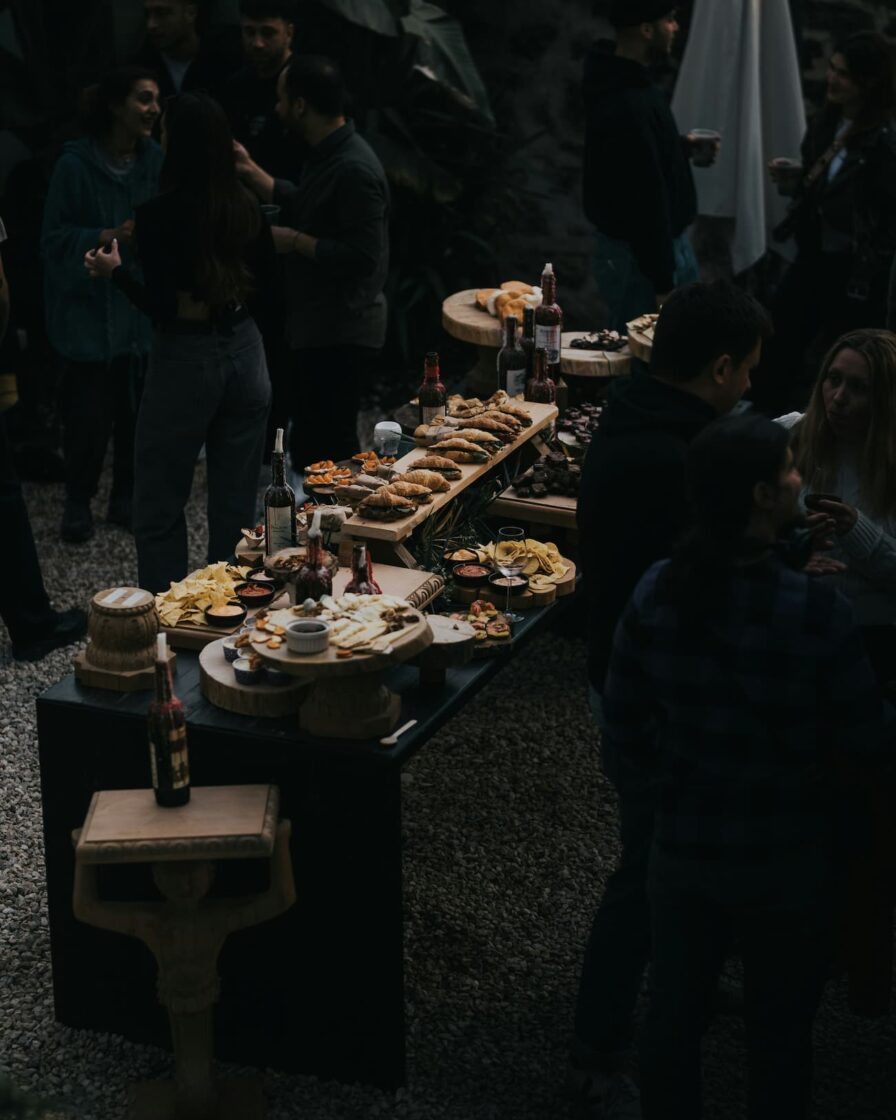
- DIY food bar: Taco bars, pizza stations, or build-your-own poke bowls let guests customize while chatting in line.
- Live cooking demo: Have someone prep a dish in front of guests partway through the event; it doubles as entertainment.
- Food pairing tasting: Walk guests through a few small, curated pairings, like cheese and honey or chocolate and coffee, with short tasting notes.
- Mocktail bar: Give non-drinkers the same craft treatment as the cocktail menu, with fresh ingredients and real presentation.
- Signature drink: One themed drink, named after the event or the guest of honor, gives people something to order and talk about.
- Tasting flight: Small-pour flights of wine, beer, coffee, or tea, with simple cards describing what’s in each glass.
Small sustainability touches, like minimizing packaging waste, sourcing ingredients locally, and offering appealing plant-based dishes, give guests something to talk about beyond taste. Sharing the story behind the food (where it came from, why you chose it) turns a menu choice into another conversation starter.
Timing, Buzz, and Planning for Recurring Events
Getting the timing right
- Schedule outdoor events for good-weather seasons and check for holiday conflicts
- Social events tend to land best on Friday evenings or weekends
- Cap interaction-heavy events at 2 to 3 hours, or build in clear breaks for longer ones
- Structure the flow: a 20-30 minute arrival buffer, a 15-minute welcome, peak activities early to mid-event, breaks every 60-90 minutes, and a strong close in the last 15-20 minutes
Timing by activity type
- Murder mysteries: 2 to 3 hours, with scene breaks every 30-45 minutes
- Trivia nights: 60-90 minutes across 5-7 rounds
- Board games: a 30-minute “learn to play” round before competitive play
- Scavenger hunts: 45-90 minutes with check-ins every 30 minutes
Building buzz before and after
- Tease the event ahead of time on Instagram, TikTok, or X, a sneak peek of an activity or surprise guest works well
- Ask guests what they’d like to see, it builds ownership and keeps things relevant
- Run a short countdown in the final week over email or social platforms
- Afterward, share photos, recordings, or a highlight reel so people can relive it
- Keep a group chat or private page going so connections made at the event don’t fade
If you’re planning events regularly
- Build a small planning group with a mix of perspectives, and split up responsibilities like budget, venue, activities, and communications
- Set a simple decision-making process so choices don’t stall
- Keep a couple of budget tiers ready in case funding shifts
- Build relationships with a few go-to vendors for recurring discounts, and figure out what you can DIY versus hire out
- Mix up event types across the year and keep one signature annual event people look forward to
Event Design Details That Make Any Gathering Work
Small tech touches help guests connect. A name tag QR code linking to a fun fact or playlist, or a matching app based on shared interests, gives people an easy opening line. A photo booth or trivia kiosk near the entrance keeps early arrivals occupied while they wait for friends.
Physical movement breaks down social barriers. Quick networking games work well before a meal, and a mini tournament (pickleball, cornhole, even a dance-off) gets people moving instead of standing around. Community art projects and small-group problem-solving activities give quieter guests a shared task to bond over.
Good design also plans for different needs. Set up a clearly labeled quiet space for sensory breaks without tucking it out of sight, choose a venue with accessible paths, and share info in more than one format. On the food side, label dishes clearly and make sure every dietary need has a real option.
Sustainability is worth building in too: digital invites, a clear recycling and compost setup, and reusable decor all cut down on waste without much extra effort. If you’re making an effort, tell guests about it, a quick mention goes further than a silent good deed.
Use a Live Social Wall to Make Your Event Shareable
Guests are already posting photos and videos from your event to Instagram, TikTok, YouTube, and X. A live social wall pulls those posts together in real time and displays them on a screen at the event, using your event hashtag or handle. It’s one of the easiest ways to set up a live social wall for your event and give guests a reason to keep posting.
Why it works: seeing their own post on the big screen is a small dopamine hit that encourages guests to post more, and it gives people on their phones an easy way back into the room. Pick a short, memorable hashtag, put the screen somewhere with foot traffic (near the food table or a photo backdrop works well), and moderate incoming posts so the feed stays on-theme.
For events with a marketing angle attached, like community festivals or sponsor-backed gatherings, our event marketing guide covers hashtag strategy and measuring reach in more depth.
How to Make Any Social Event Feel Unique
If you’re looking for unique event ideas beyond the standard format, small creative choices go further than a bigger budget.
- Pick an unexpected venue: A rooftop, a botanical garden after hours, or someone’s garage turned into a speakeasy.
- Layer in one sensory detail: A signature scent, a themed playlist, or lighting that shifts through the night.
- Give the night a throughline: Tie the invitations, decor, and activities to one story or theme instead of treating them separately.
- Let guests personalize something: A build-your-own name tag station, a choice of two activity tracks, or a take-home item they helped make.
These are some of the more creative event ideas worth stealing because they’re low-cost and easy to adapt to almost any gathering size.
How to Know Your Social Event Worked
You don’t need a dashboard full of metrics to know if a social event landed. Watch a few signals instead: how many guests engaged with your event hashtag on Instagram, TikTok, YouTube, and X, how active the group chat stays with photos in the days after, and what people actually say when you ask “how was it?” the following week. A short post-event survey, three questions, sent the same day, will tell you more than a headcount ever could.
The events people keep coming back to share a pattern: they’re personal to the group in the room, built around real connection instead of just logistics, and increasingly documented and shared as they happen. That’s why the small touches, a signature drink, a great scavenger hunt, a screen full of everyone’s photos, matter more than ever.
Whichever social event ideas you pick, one thing makes them all more memorable: giving guests a reason to keep posting, and a place to see it happen. That’s exactly what a Juicer.io live social wall does, pulling every photo and post tagged to your event onto one shared screen in real time. Set up a social wall for your next event and turn your guest list into your best source of content.