
User-generated content is the photos, videos, reviews, and posts that real customers create about a brand, and the best UGC examples on Instagram show what happens when a company turns those posts into its main marketing channel. Below are 10 brands that nailed it, what each one actually did, and the results they earned, so you can borrow the mechanic that fits your audience.
Want to see UGC inside a live website feed? Check out our Instagram feed embed examples, where brands pull user posts straight onto their own pages.
What is User Generated Content?

User-generated content (UGC) is any content created and shared by customers or fans rather than the brand itself: Instagram photos and videos, Stories, Reels, customer reviews, comments, and blog posts about a product or experience. On Instagram it usually arrives through a branded hashtag, a tagged post, or a customer who simply shares a great shot of your product in real life. The examples of user generated content below are all Instagram-led, but the same playbook works anywhere your customers post.
UGC works because it reads as honest. According to Nielsen’s Global Trust in Advertising research, 92% of people trust recommendations from other people, even strangers, over branded advertising. Customer content is that recommendation, made visible. A strong UGC strategy turns happy buyers into brand advocates and brand ambassadors who create your content and earn your audience’s trust at the same time. It also builds brand loyalty, because customers who see their own posts featured feel a real stake in the brand. That is why UGC is such a win for marketers and brands.
What makes a good UGC example?
Not every customer post is a campaign. The examples that work, and the ones search engines and AI summaries tend to cite, share four traits:
- Authenticity. It looks like a real person, not a studio shoot. Unscripted beats polished.
- A clear brand tie. A branded hashtag, a product clearly in frame, or a tagged account makes it obvious whose content this is.
- A repeatable mechanic. A hashtag, a contest, or a regram pattern that customers can join again and again, not a one-off stunt.
- A measurable result. Posts collected, reach, engagement, site visits, or sales lift. A good example proves it moved a number.
Keep those four in mind as you read the brands below. Every one of them hits all four.
10 User-Generated Content Examples on Instagram From Brands That Nailed It
Here is the quick version. Each campaign, the platform and hashtag it runs on, the tactic, and the result it produced. Detail on each follows the table.
| Brand | Platform / hashtag | Tactic | Result |
|---|---|---|---|
| GoPro | Instagram, YouTube / #GoPro, #GoProAwards | Awards and Million Dollar Challenge that pay creators for footage | 43,000 challenge submissions in one year; nearly 20M Instagram followers |
| Airbnb | Instagram / regrams | Reshares guest and host travel photos as the feed | Most of its Instagram engagement is driven by guest content |
| Alo Yoga | Instagram / #aloyoga | Curates and credits real yogis wearing the gear | Feed runs largely on community posts; creators tagged in every share |
| Apple | Instagram / #ShotOniPhone | Reposts photos shot by iPhone owners worldwide | More than 31M posts under the hashtag on Instagram |
| Aerie | Instagram / #AerieREAL | Unretouched real-customer photos, with a donation per post | Over 220,000 #AerieREAL tags on Instagram |
| Starbucks | Instagram / #RedCupContest | Annual holiday photo contest with prizes | Over 24,000 entries in roughly five days |
| Coca-Cola | Instagram / #ShareACoke | Personalized bottles people photograph and share | Over 500,000 photos shared in the first year across 80+ countries |
| Lululemon | Instagram / #thesweatlife | Customers share workouts in the apparel | Hashtag used 800,000+ times on Instagram |
| Glossier | Instagram / reposts | Reposts customer selfies and reviews regardless of follower count | Founder credits ~70% of online sales and traffic to peer referrals |
| Wayfair | Instagram / #WayfairAtHome | Customers show furniture in their actual homes | UGC-led strategy drove a 774% rise in traffic to its Instagram profile and site |
1. GoPro: the gold standard of Instagram UGC
GoPro is the brand most often named when people talk about user-generated content, and for good reason. Instead of spending heavily on traditional ads, GoPro built its marketing on footage its own customers shoot. It encourages users to share their best clips with branded hashtags like #GoPro and #GoProAwards, then features the standouts to its community of nearly 20 million Instagram followers.
The mechanic that keeps the content flowing is incentive. Through GoPro Awards, the company pays out millions of dollars a year to creators, and its annual Million Dollar Challenge drew a record 43,000 submissions in a single year, with the winning clips paid out in equal shares and cut into a highlight reel. Customers get cash and a global stage, GoPro gets an endless supply of authentic content that shows exactly what its cameras can do.
Takeaway: pair a branded hashtag with a real reward and you turn customers into a content engine that never stops.

2. Airbnb: travel UGC as the entire feed
Most of Airbnb’s Instagram engagement is driven by content from its own guests and hosts. Rather than producing glossy destination ads, Airbnb reshares photos of unique homes, experiences, and destinations captured by real travelers, framing the brand around travel that feels local, authentic, and inspiring.
The reshare itself is the incentive. If Airbnb likes your shot, you might get a message asking to feature it, and a place on a feed seen by a huge global audience is a reward worth posting for. Following hashtags like #Airbnb shows the steady stream of guest content that powers the account.
Takeaway: follow your branded hashtag and tagged mentions as a sourcing pipeline, then DM the best posters for permission before you regram; the ask itself signals you feature real guests, which prompts more of them to tag you.

3. Alo Yoga: a community-powered product feed
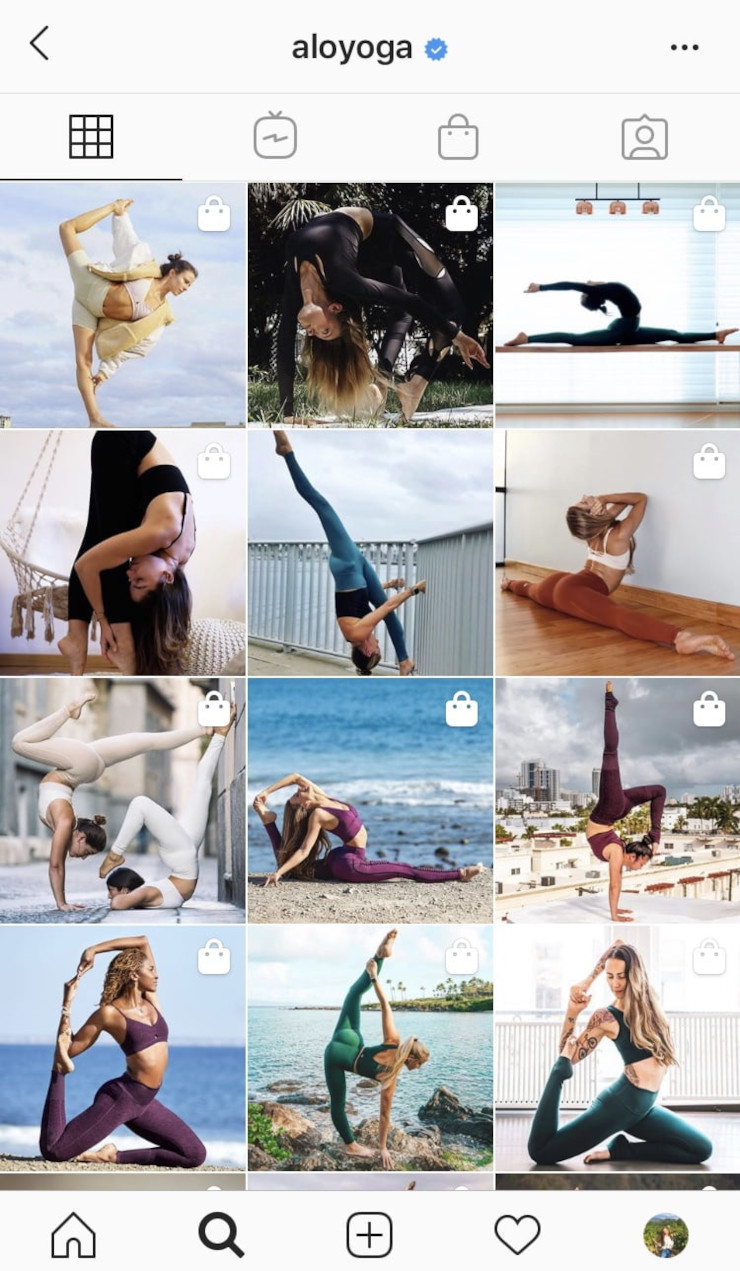
Alo Yoga is a clothing and lifestyle brand for yogis and fitness enthusiasts, and most of what appears on its Instagram is curated from its community, real people wearing Alo while they practice, play, and travel. Showcasing actual customers in the gear highlights new lines and proves the clothing’s comfort and function far better than a catalog shot.
Alo’s team tags the person pictured and often adds a note about the products in frame, so every post doubles as a credit and a soft product placement. The #aloyoga hashtag is the open door for customers who want a chance to be featured.
Takeaway: crediting the creator in every share is both good manners and a quiet invitation for the next customer to post.
4. Apple: #ShotOniPhone turns owners into a camera review
Apple’s #ShotOniPhone campaign asks a simple question, what can this camera do, and lets customers answer it. iPhone owners around the world post their best photos under the hashtag, and Apple features standout work across its channels, on billboards, and in ads. The result is a living gallery of proof that the product delivers, all created by the people who bought it.
The hashtag has gathered more than 31 million posts on Instagram, a self-renewing showcase that no studio budget could match. It also flips a weakness into a strength: instead of claiming the camera is great, Apple lets millions of real shots make the case.
Takeaway: if your product’s value is something customers can demonstrate, build a hashtag that invites them to prove it for you.
5. Aerie: #AerieREAL and the power of a stand
Aerie built #AerieREAL on a promise: it stopped retouching the models in its marketing. That honesty invited customers to share their own unedited photos wearing Aerie products under the hashtag, and the brand engages with and reshares that content. The campaign has collected more than 220,000 #AerieREAL tags on Instagram.
Aerie added a cause to the mechanic, donating to the National Eating Disorder Association for qualifying posts, which gave customers a reason to participate that went beyond a discount. The campaign turned a values statement into a content movement.
Takeaway: a genuine brand stance gives customers something to rally around, and a cause-based incentive can be more powerful than a coupon.
6. Starbucks: #RedCupContest and seasonal urgency
Every holiday season Starbucks invites customers to photograph its iconic red cups and share them with #RedCupContest for a chance to win a prize. The seasonal timing creates urgency and a recurring tradition, so the campaign builds anticipation year over year rather than starting cold each time.
The format is low effort for the customer, snap the cup you already bought, which is part of why one run pulled in more than 24,000 entries in roughly five days. The branded cup does double duty as product and prop.
Takeaway: a recurring, seasonal contest with a tiny ask compounds into a tradition your audience expects and joins.
7. Coca-Cola: #ShareACoke and personalization at scale
Coca-Cola’s #ShareACoke campaign put common first names and labels on its bottles, then asked people to find a name that mattered to them, photograph it, and share it. Personalization gave customers a reason to seek out, buy, and post the product, turning a bottle into a personal object worth a photo.
The campaign generated more than 500,000 photos shared in its first year and rolled out across more than 80 countries. It is a textbook example of designing the product itself to trigger sharing, rather than asking customers to create something from scratch.
Takeaway: build the share trigger into the product itself (a name, a customizable label, a limited edition), so buying it and photographing it are the same act and customers need no separate prompt to post.
8. Lululemon: #thesweatlife and lifestyle alignment
Lululemon’s #thesweatlife invites customers to share their workouts, yoga sessions, and everyday active moments in Lululemon apparel. Because the hashtag is about a lifestyle rather than a product pitch, it feels natural for customers to join, and the brand gets a constant feed of real bodies using the gear in real conditions.
The hashtag has been used more than 800,000 times on Instagram, and earlier runs of the campaign were credited with driving tens of thousands of new visitors to the brand’s site. The content reinforces who Lululemon is for without the brand having to say it.
Takeaway: anchor your hashtag to your customer’s identity and activity, not your product, and participation feels like self-expression instead of advertising.
9. Glossier: a brand built on customer reposts
Glossier grew by treating its customers as its marketing team. The beauty brand regularly reposts customer selfies, reviews, and tutorials, and it does so regardless of how many followers the person has, which signals that anyone’s content can make the feed. That inclusivity keeps customers posting.
The approach makes the brand feel like a community rather than a company talking at people. Customers see themselves reflected in the feed, which both flatters contributors and reassures shoppers that real people use and love the products. Founder Emily Weiss has credited roughly 70% of Glossier’s online sales and traffic to peer-to-peer referrals, the word-of-mouth that customer content fuels.
Takeaway: repost everyday customers by name regardless of their follower count, so contributors of any size keep posting; do not gate your feed to influencers.
10. Wayfair: #WayfairAtHome and content that sells
Wayfair’s #WayfairAtHome asks customers to share photos of Wayfair furniture in their actual homes. Those in-context shots solve a real shopping problem: catalog images show a product in a styled studio, but customer photos show how it looks in a normal living room, which helps the next shopper picture it in their own space.
By featuring this content, Wayfair turns customers into a styling gallery that doubles as social proof at the exact moment a shopper is deciding. The UGC is not just engagement, it is a sales aid: Wayfair credited its UGC-led Instagram strategy, anchored by #WayfairAtHome, with a 774% rise in traffic to its Instagram profile and site in a single year.
Takeaway: reshare in-home customer photos on the product pages where people decide, and tag the exact items in frame so the UGC answers “how will this look in my space” at the point of purchase.
How to Run Your Own Instagram UGC Marketing Campaign
If the campaigns above have you inspired, you can build a similar strategy for your own business with a few simple steps. One caveat the best campaigns share: collecting great customer posts is only half the job, and displaying them consistently where shoppers will see them is the other half, which is where most brands stall.
1. Match the UGC promotion to your audience
The challenge you offer should fit your brand’s identity and your audience’s interests. Asking followers to tag photos of themselves practicing yoga makes sense for a yoga brand but not for a bakery. Aim for a request that serves your brand and involves an activity your followers already enjoy.
2. Request content you can actually use
Be clear with followers that the photos they submit may be used in your marketing. This keeps everyone on the same page and helps contributors frame your product well when they shoot.
3. Match the reward to the effort
If you are a smaller brand, most people will not post without an incentive. Offer a prize that fits the ask: a discount, a free item, or one big prize like a trip if you are running a single winner. If your brand already carries social clout, many customers will share simply for the chance to be featured.
4. Stay legally informed about using customer content
Cover your legal bases before resharing anyone else’s post. Ask permission first, and where appropriate include terms about the user acknowledging the repost, the transfer of usage rights, and any contest rules.
Collect and Display Your Instagram UGC With Juicer
Inspiration and a campaign plan get you the posts. The next problem is how to collect UGC and display it, and that is exactly what Juicer’s Instagram aggregator does. Point it at your branded hashtag or your Instagram account and Juicer pulls the matching posts into one feed automatically, so you are not hunting through Instagram by hand every day.
One detail worth getting right, because it decides what kind of feed you end up with: the source term you add is read by its prefix. A term that starts with #, like #thesweatlife, is treated as a hashtag source and collects posts from anyone who tagged it, which is the actual customer-content engine behind every campaign above. A plain handle or one starting with @ is treated as an account source and pulls only that account’s own posts. So if you want the UGC, aggregate the branded hashtag, not just your own profile. (Some Instagram hashtag and business-account sources require connecting a social account first, a Graph API requirement Juicer surfaces during setup.)
Before anything goes live, you control what shows. New posts that match your filters do not appear in public until they clear moderation: Juicer holds them in a moderation queue where you review each one manually, or set rules and filters that screen out duplicates, profanity, and off-brand content automatically, so only your best customer content reaches the feed. Then you embed the feed right on your website, or display it as a social wall at an event or on a screen, turning the UGC you collected into a living showcase that updates itself. There is a free plan to start, and the feed refreshes as new customer posts roll in.
If you are still deciding which tooling approach fits your team, our complete guide to UGC platforms compares the options for creating, collecting, and displaying user-generated content. This page is about the examples to inspire your campaign; that guide is about the tools to run it.
User-Generated Content Curation Tips for Success
Whatever the specifics of your campaign, a few principles keep engagement high. First, genuinely connect with your community of followers and avoid overtly salesy copy that makes the brand sound disingenuous. Second, watch for brand advocates: a UGC campaign is one of the best ways to find the true fans who might partner with you as ambassadors or influencers. Finally, always tag and credit the person who contributed the content. It strengthens trust with that follower and shows your wider community that your brand treats its contributors right.
Pick the example above that fits your audience, borrow the mechanic, and start collecting. The brands that nailed UGC did not have better customers, they had a clearer ask and a reliable way to put the results on display.